Clínica Dental Padrós
Articles ·
Do dental veneers look natural? How to achieve it
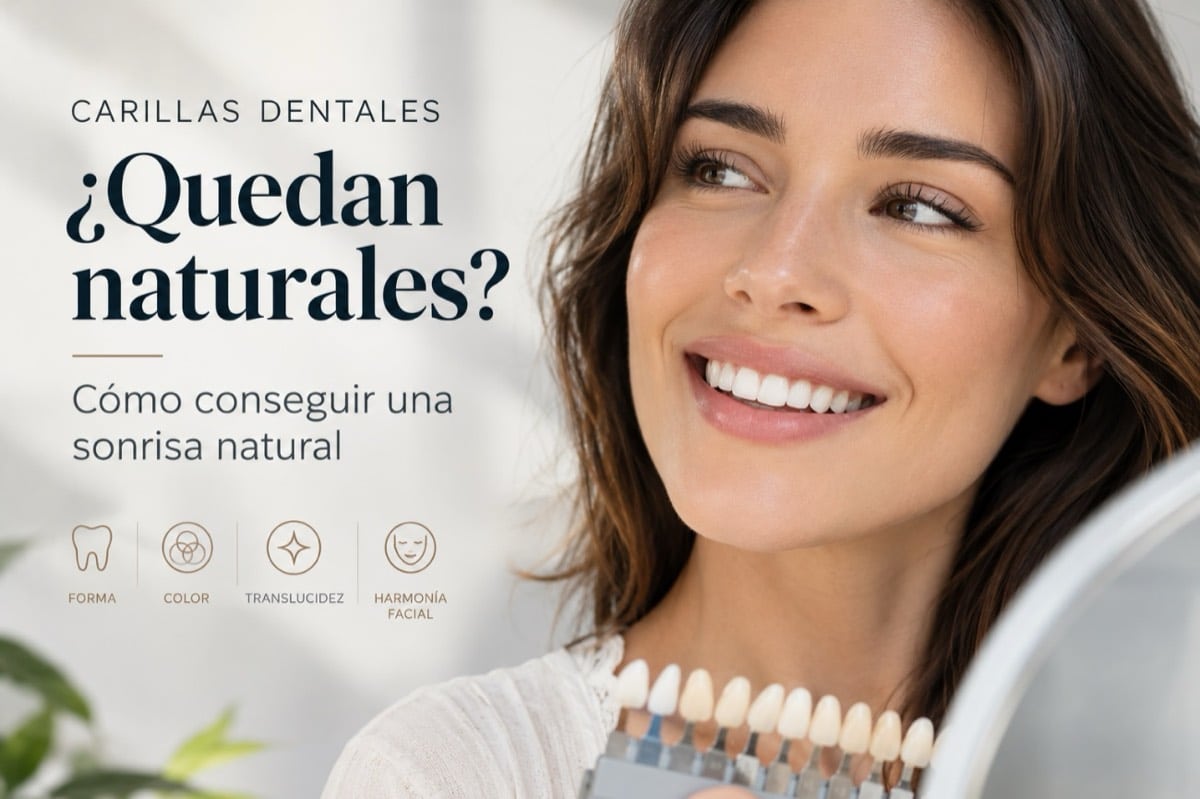
One of the main concerns for anyone considering dental veneers is not only the colour or the price. It is this: “Will people notice?”
And it is a very important question. Because a beautiful smile should not look artificial. Teeth do not need to be perfectly identical, excessively white or all exactly the same shape.
Good aesthetic dentistry aims for something much harder: teeth that look beautiful without looking like veneers.
Achieving this depends on many factors: the diagnosis, the smile design, the position of the teeth, the relationship between teeth and gums, the material, the shape of the veneers, surface texture, colour and, above all, the experience of the professional and the team who make them.
Can dental veneers look natural?
Yes. They can achieve an extremely natural result when properly indicated, designed and made. One of the aims of modern aesthetic dentistry is not to create perfect teeth in isolation, but to bring the teeth into harmony with the patient's face, lips, gums, age and personality. The key is to understand that a natural smile does not mean an imperfect smile. It means that the features of the teeth are balanced and consistent with the face as a whole.What makes dental veneers look natural?
1. The shape of the teeth
One of the most common mistakes is to think that all the front teeth should have exactly the same shape. They don't: central incisors, lateral incisors and canines have different functions and anatomical features. A veneer that is too square, too long or has unnatural angles can make a smile look artificial even if the colour is perfect.2. The colour shouldn't just be “white”
A natural smile doesn't have to be as white as paper. Natural teeth have different degrees of translucency, brightness and saturation, and are not usually exactly the same colour across their whole surface. Simply choosing “the whitest white” is not necessarily the best decision.3. Translucency is essential
This is one of the features that most influences whether a porcelain restoration looks natural. Thickness, opacity, translucency, the colour of the underlying tooth, the ceramic material, the layering technique and the cement all need to be controlled.4. Surface texture matters too
Surface texture changes how light falls on the tooth. A veneer that is too smooth can look artificial, especially up close or under certain types of lighting.5. The gums are as important as the teeth
A perfectly made veneer may not look good if there is gum inflammation, asymmetric gum margins, excess gum or recession. Before starting an aesthetic treatment it is essential to check that the gums are healthy.6. The relationship between teeth, lips and face
We don't design a smile by looking only at the teeth. We need to see how much of the teeth shows when speaking and smiling, where the edge of the incisors sits relative to the lower lip, and whether the smile line is balanced with the proportions of the face.What is Digital Smile Design?
Digital Smile Design (DSD) is a tool for analysing and planning the aesthetics of the smile using photographs, videos and digital records. Its aim is not simply to “create a perfect smile”, but to help study how the teeth can blend in with the patient's face: tooth proportions, smile line, tooth display, midline and symmetry. At Clínica Padrós we use digital planning tools and digital models to study each case before treatment, so that decisions are made with more information.What is a mock-up and why is it so important?
One of the best ways to judge whether future veneers can look natural is to see a simulation of the result beforehand. We can create digital simulations and also do an aesthetic trial directly on your teeth. A mock-up transfers the planned design temporarily to the mouth so the patient can see the shape, length, volume, proportions and tooth display. And there is something even more important: the patient can take part in the design process.Do veneers that are too white look artificial?
They can, but that doesn't mean a white smile is necessarily artificial. The problem arises when the chosen colour doesn't fit with the rest of the smile's features: shape, texture, translucency, volume, proportion and gums.Why do some veneers look like “porcelain teeth”?
Usually because of a combination of factors: teeth that are too big, teeth that are too uniform, colour that is too opaque, the wrong surface texture, excessive length, a design that ignores the face or a lack of prior planning.Is it better for all the veneers to be exactly the same?
Not necessarily. In fact, a smile that is too symmetrical can look less natural. Teeth can have small differences in length, shape, rotation, texture and position. High-level aesthetic dentistry seeks harmony, not absolute uniformity.Composite or porcelain veneers: which look more natural?
Both can achieve very natural results. Composite is applied directly on the tooth to change shape, length, volume, colour and texture, with the advantage that changes and repairs can be made directly in the clinic. Porcelain offers excellent optical properties and great colour stability, reproducing translucency, opalescence and fine details very precisely. There is no rule that porcelain always looks more natural than composite: the quality of the diagnosis, design and execution is what makes the difference.Can no-prep veneers look natural?
Yes, in some cases, as long as there is room to add the material without creating excess bulk. If a tooth already has the right position or volume and we simply add a veneer on top, we can create a tooth that is too prominent.How many veneers do I need for my smile to look natural?
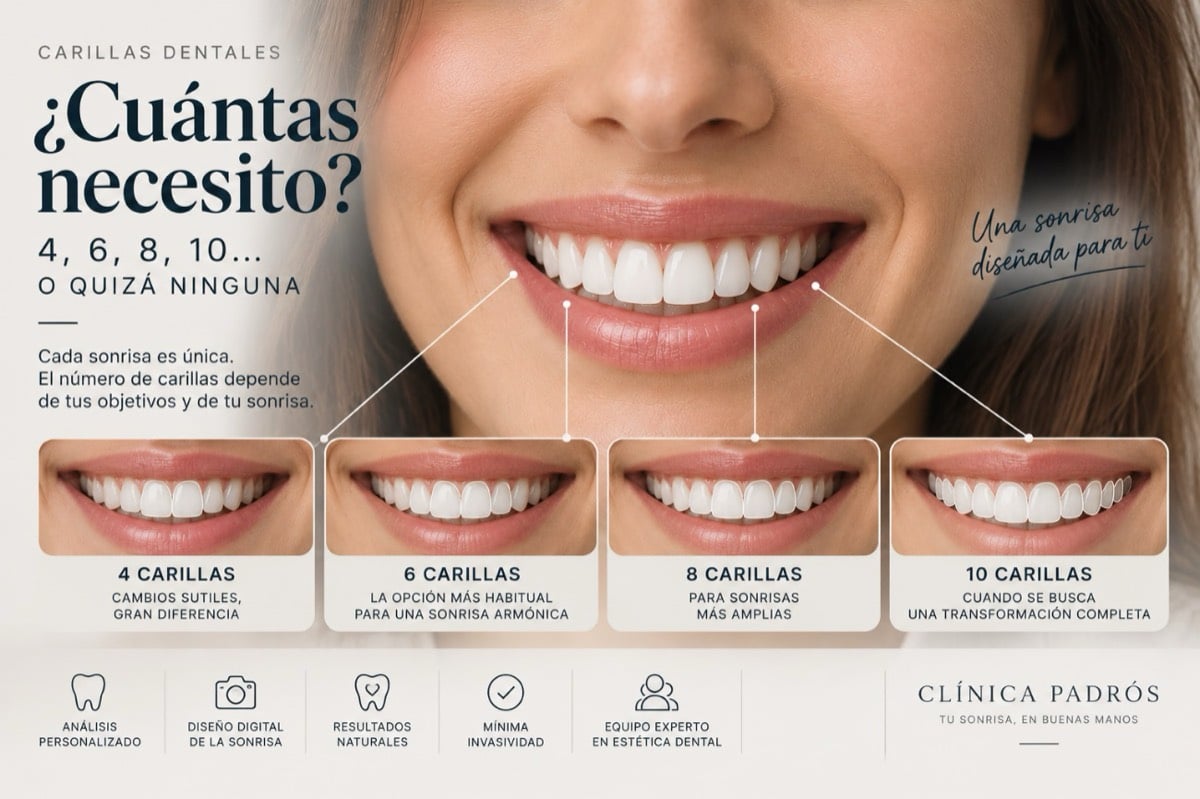
There is no universal number. Some patients may need only one or two restorations; others may benefit from treatment on six, eight or ten teeth. More veneers don't necessarily mean a nicer smile: in many cases a more limited treatment can be enough.Can a natural smile be achieved without veneers?
Of course. Depending on the case, teeth whitening (when the main problem is colour), orthodontics (when the position of the teeth is the main problem), composite restorations (for small changes in shape or volume) or a combination of techniques may be more suitable.The 7 principles of a natural smile
- Proportion. The teeth must be in the right proportion to each other.
- Facial integration. The smile must be in harmony with the face.
- Colour. There should be brightness without losing optical depth.
- Translucency. The materials must reproduce the way light behaves properly.
- Texture. The surface must have an anatomy consistent with a natural tooth.
- Gums. The gum tissue must be healthy and properly integrated.
- Preservation. Whenever possible, we should preserve as much healthy tooth structure as we can.
How are veneers planned so that they look natural?
A treatment with high aesthetic demands should start long before the teeth are touched: diagnosis, photography, intraoral scanning, design, simulation, a trial (mock-up), fabrication with the laboratory, bonding with proper protocols and maintenance with regular check-ups.The secret of natural-looking veneers isn't only in the veneer
A veneer is just one part of a much broader treatment. The final result depends on diagnosis, design, materials, laboratory, technique, function and maintenance. That is why two patients can both have “porcelain veneers” and get completely different results.What should good veneers look like?
When the treatment is done well, we should see a harmonious smile, well-proportioned teeth, a suitable colour, good integration with the gums and a natural look when speaking and smiling. And above all: nobody should have to ask whether you have veneers. That is one of the best signs that they look natural.Frequently asked questions about natural-looking veneers
Can dental veneers look natural?Yes. With proper planning, suitable materials and precise execution they can blend in very naturally with the teeth, gums, lips and face.
Do veneers have to be perfectly white?No. The colour should suit the patient and the desired result. A natural smile can be very white, but it must also have depth, translucency and harmony.
Do all the veneers have to be the same?Not necessarily. Harmony and proportions matter more than identical teeth.
Are porcelain veneers more natural than composite ones?Not always. Both materials can give very natural results. The indication, design, technique and the team's experience are key factors.
How can I know what my veneers will look like before they are placed?Planning with photographs, digital models and a mock-up can let you see and try the design before the final restorations are made.
Conclusion: a beautiful smile shouldn't look artificial
The best veneers aren't necessarily the whitest, biggest or most eye-catching. They are the ones that blend in with the person. A natural smile requires studying much more than the teeth: the face, lips, gums, bite, proportions, colour and the patient's personality all need to be analysed. The goal is not to manufacture a perfect smile. It is to create a smile that looks like yours, at its best.Would you like to know which option can give you a natural smile?
At Clínica Padrós we study each smile individually, taking into account aesthetics, function, facial proportions and tooth preservation before recommending a treatment.Selected references
- Esthetic smile rehabilitation with direct composite veneers: a narrative review — Lanzaretti G, et al. Minerva Dent Oral Sci. 2025.
- Stratification of composite restorations: systematic and durable replication of natural aesthetics — Magne P, Holz J. Pract Periodontics Aesthet Dent. 1996.
- Influence of thickness on color in multi-layering technique — Vichi A, et al. Dent Mater. 2007.