Clínica Dental Padrós
Articles ·
Dental veneers: what they are, how long they last and when they are indicated

What exactly are dental veneers?
Dental veneers are restorations that mainly change the visible part of the tooth. They can correct certain aesthetic problems such as:- Teeth with irregular shapes.
- Teeth that are too small.
- Worn teeth.
- Small gaps between teeth.
- Differences in size or proportion.
- Some discolourations that do not respond well to whitening.
- Small chips or irregularities.
What types of dental veneers are there?
The two most common options are composite veneers and porcelain veneers.Composite veneers
Composite is a material that can be applied and sculpted directly on the tooth. One of its main advantages is that it allows very conservative changes and, in some cases, the material can later be repaired or modified. Composite veneers are particularly useful when small changes in shape, proportion or volume are needed.Porcelain veneers
Porcelain veneers are custom-made and then bonded onto the teeth. They can achieve excellent aesthetic results and high material stability when the case is properly indicated and planned. Porcelain can look very natural thanks to its optical properties, although the choice of material must depend on each patient's specific features.Which is better: composite or porcelain?
There is no answer that applies to everyone. The choice depends on factors such as:- The condition of the teeth.
- How much tooth structure is available.
- Aesthetic goals.
- The number of teeth to be treated.
- The bite.
- Whether there is bruxism.
- The patient's habits.
- Expectations about longevity and maintenance.
- The type of change you want to achieve.
Which problems can veneers be indicated for?
Veneers can be an option when the problem is mainly aesthetic and there is enough healthy tooth structure.Small teeth
When the teeth are small in relation to the proportions of the smile, it may be possible to visually change their length or width.Worn teeth
In some cases of tooth wear, restorations can help recover part of the lost anatomy. But when the wear is significant, it is essential to identify its cause first. For example, if there is bruxism, treating only the appearance of the teeth without controlling the functional problem can compromise the long-term result.Irregularly shaped teeth
Veneers can correct certain differences in shape and help achieve greater harmony between the teeth.Gaps between teeth
In some cases they can be used to change the proportions of the teeth and close small gaps. However, before closing a gap we need to find out why it exists. For some patients orthodontics may be more appropriate.Discolouration
When there is discolouration that does not respond well enough to whitening, veneers can be an alternative. That is why, before placing veneers just to have whiter teeth, it is worth checking first whether whitening can achieve the desired result in a more conservative way.Do veneers require drilling the teeth?
This is one of the most frequent questions. The answer is: it depends on the case. In some situations it is possible to make veneers with minimal tooth preparation or even without conventional reduction. But “no-prep veneers” does not mean this technique is suitable for everyone. The available space, the position of the teeth, their shape, the bite and the result you want to achieve are all decisive. Proper planning tells us how much preparation, if any, is needed. If the priority is not to prepare the teeth at all and their position is not favourable, a short course of orthodontics can be considered first to align the teeth and bring them into an ideal position.Do dental veneers look natural?
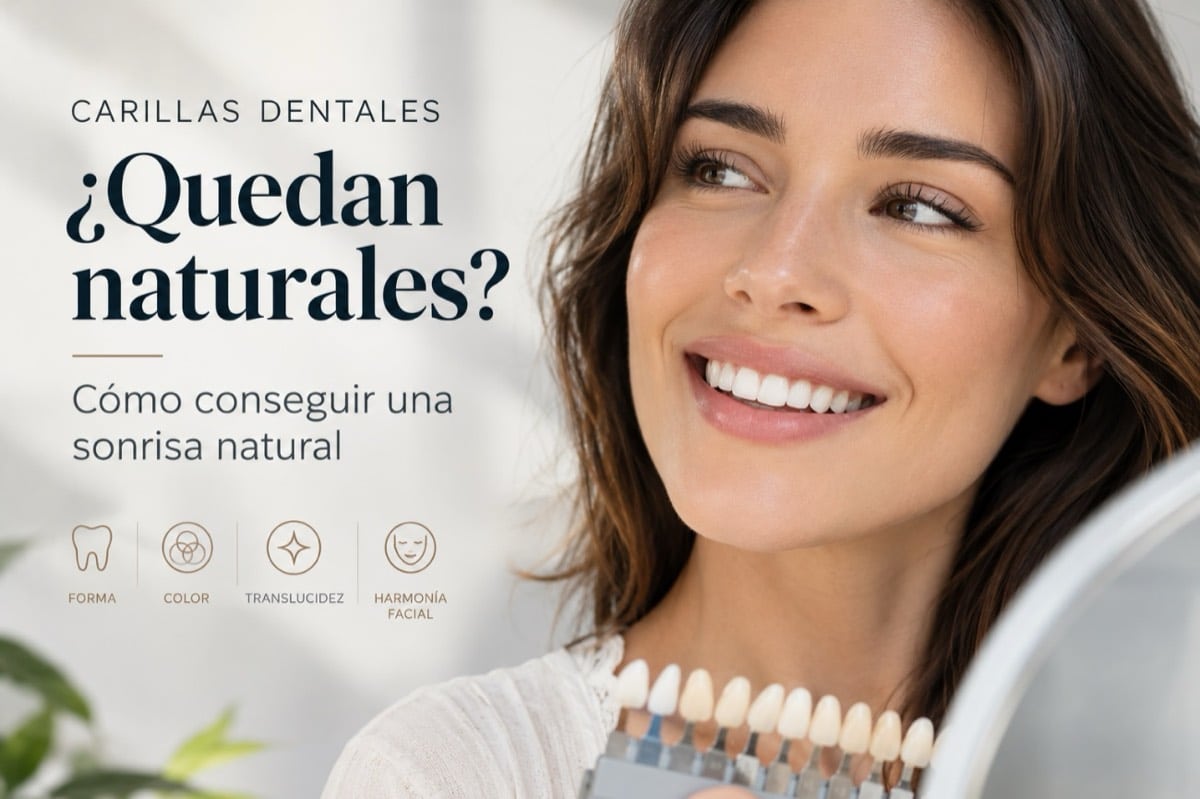
Yes, very natural results can be achieved when the treatment is properly designed. Natural appearance does not depend only on colour. Other factors include:- The shape of the teeth.
- Their length.
- Their width.
- The proportions between them.
- Surface texture.
- Translucency.
- Opalescence.
- Fluorescence.
- The relationship between teeth and gums.
- The smile line.
- The relationship with the lips and face.
Can you see how the smile will look before treatment?
Digital planning lets us study the smile before treatment begins. Using photographs, digital records and design tools, we can analyse the proportions of the teeth and plan different options. We can view digital simulations of the new smile, and we usually also do a trial run to assess the proposed shape and volume. This lets the patient take part in the process and better understand the proposed changes before making a final decision.How many veneers do I need?
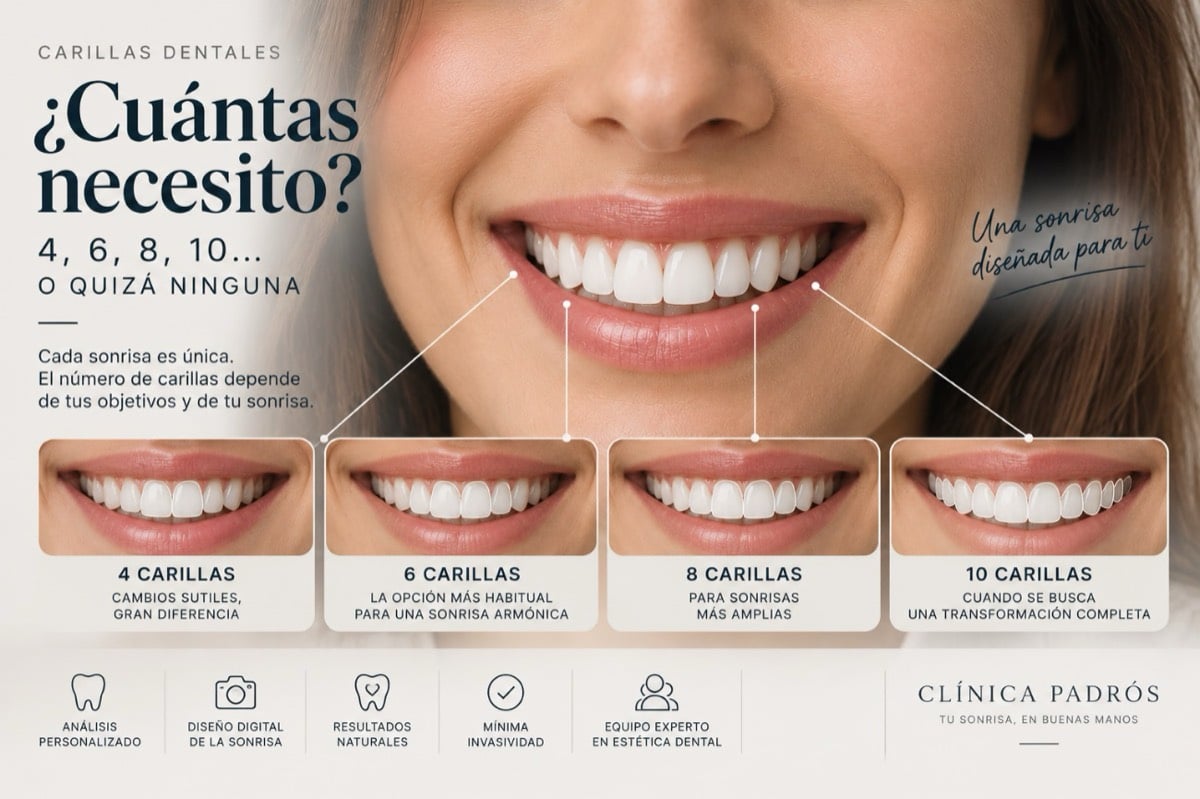
There is no standard number. Some people can improve certain aspects of their smile with just a few restorations, while others may need more teeth treated to achieve proper aesthetic integration. The decision depends on: which teeth show when you smile, which problem we want to correct, the width of the smile, tooth proportions, the relationship between teeth and gums, the colour you want and the bite. For this reason, it is not advisable to decide the number of veneers based only on a photograph or a price per unit.How long do dental veneers last?
Longevity depends on the material, the treatment design, the bite, the patient's habits and maintenance. There is no universal number of years that can be guaranteed for everyone. Good planning, proper hygiene and regular check-ups are important to keep restorations in good condition. Controlling factors such as bruxism, when present, is also essential.Do veneers need special care?
Veneers need similar care to natural teeth, although regular check-ups make it possible to monitor both the restorations and the health of the teeth and gums. It is important to:- Keep good oral hygiene.
- Have regular check-ups.
- Clean between the teeth properly.
- Avoid using your teeth to open things.
- Control habits that can increase the risk of fracture.
- Treat bruxism when indicated.
Are veneers suitable for everyone?
No. Before recommending veneers, we need to assess the patient's oral health and functional features. For example, it may be necessary to treat first: tooth decay, gingivitis or periodontitis, bite problems, significant tooth wear, bruxism or tooth position problems. In some cases the best decision may be not to place veneers and to choose a different treatment. This assessment is especially important because aesthetic dentistry should not be limited to changing how the teeth look: it must maintain or improve their function and health.Veneers, whitening or orthodontics?
This is one of the most important decisions.If the main problem is colour
Teeth whitening may be enough.If the main problem is position
Orthodontics may be more appropriate, including invisible orthodontics in some cases.If the problem is mainly shape or proportion
Veneers may be the best option.If there are several problems at once
Treatments may need to be combined. For example, a patient might first need orthodontics, then whitening and finally small aesthetic changes. So the question should not only be “which veneers should I get?”, but: what is the most conservative way to achieve the result I want?What advantages can veneers offer?
When properly indicated, veneers can: improve the shape of the teeth, change certain proportions, correct small irregularities, improve some colour problems, harmonise a smile and restore certain worn tooth structures. Their main advantage should not be purely aesthetic: they can also be part of a planned restorative treatment to recover lost tooth anatomy.What are the drawbacks?
Like any dental treatment, veneers also have limitations. Depending on the case, they may require tooth preparation, maintenance or repairs. They are also not suitable for every situation. An incorrect indication, poor planning or ignoring functional problems such as bruxism can affect the result. That is why a diagnosis is important before deciding on treatment.How is a veneer treatment planned?
An aesthetic dental treatment should start with an individual study. At a first assessment we can look at the health of teeth and gums, bite and function, the shape and proportion of the teeth, the smile line, colour, existing wear, the patient's expectations and treatment alternatives. With this information a personalised treatment plan can be drawn up. Where indicated, digital planning can help to visualise and communicate the expected result better.What should I ask my dentist before getting veneers?
Before starting treatment, it is a good idea to ask:- Why do I need veneers?
- Is there a more conservative alternative?
- Do my teeth need to be prepared?
- Which material is best for me?
- How many teeth would need to be treated?
- How has the shape of the teeth been designed?
- What happens if I have bruxism?
- How will the veneers be maintained?
- How long can I expect them to last in my case?
- Can I see or try the proposed design beforehand?
Frequently asked questions about dental veneers
Are dental veneers forever?No dental restoration should be considered “forever”. How long it lasts depends on many factors and requires maintenance and check-ups.
Do veneers damage the teeth?Properly indicated and planned veneers should not be designed to damage healthy teeth. The amount of preparation depends on the case, and a very conservative technique can usually be used.
Which is better, composite or porcelain?It depends on the patient. Composite and porcelain have different properties, and the choice should be made after assessing the teeth, bite, aesthetic goals and expectations.
Can veneers be placed without drilling the teeth?In some cases yes, but it is not a universal technique. The position and anatomy of the teeth must allow it.
How many veneers do I need?It depends on the smile, the problem to be corrected and how many teeth show. There is no standard number.
Can veneers be whitened?Restorations do not respond to whitening like natural teeth. That is why it is important to plan the colour before placing aesthetic restorations.
Can I get veneers if my teeth are worn?In some cases yes. However, the cause of the wear must be identified first and the function and bite assessed.
Can I get veneers if I have bruxism?It may be possible, but bruxism must be assessed and controlled because it can increase the risk of wear or fracture of the restorations.
Is it better to get veneers or Invisalign?It depends on the problem. Invisalign may be more appropriate when tooth position is the main problem, while veneers can change shape, size and certain aesthetic aspects. In some cases they can be part of the same treatment plan.
What is the best treatment for my smile?
There is no single aesthetic solution that works for every patient. A smile can be improved with whitening, orthodontics, veneers, changes to the shape and position of the gums, restorations or a combination of treatments. The key is to make an individual diagnosis and choose the option that achieves the desired result while preserving the teeth as much as possible and maintaining good function and oral health. At Clínica Padrós we study each smile individually to decide which treatment may be most suitable and, when the case allows, plan the result before starting.If you'd like to know approximate prices, see our guide on how much dental veneers cost in Barcelona.
Would you like to know what options there are to improve your smile?
Book a first assessment and we will study your case, your goals and the different treatment alternatives.Selected references
- Retrospective Long-Term Clinical Outcome of Feldspathic Ceramic Veneers — Mihali SG, et al. Materials (Basel). 2022.
- Clinical long-term results with 617 Cerec veneers: a nine-year report — Wiedhahn K, et al. Int J Comput Dent. 2005.
- Composite veneers: The direct-indirect technique revisited — Fahl N Jr, Ritter AV. J Esthet Restor Dent. 2021.
- Randomized clinical trial on indirect resin composite and ceramic laminate veneers: Up to 10-year findings — Gresnigt MMM, et al. J Dent. 2019.
- Direct anterior composite veneers in vital and non-vital teeth: a retrospective clinical evaluation — Coelho-de-Souza FH, et al. J Dent. 2015.