Clínica Dental Padrós
Articles ·
How long do dental veneers last? Composite and porcelain
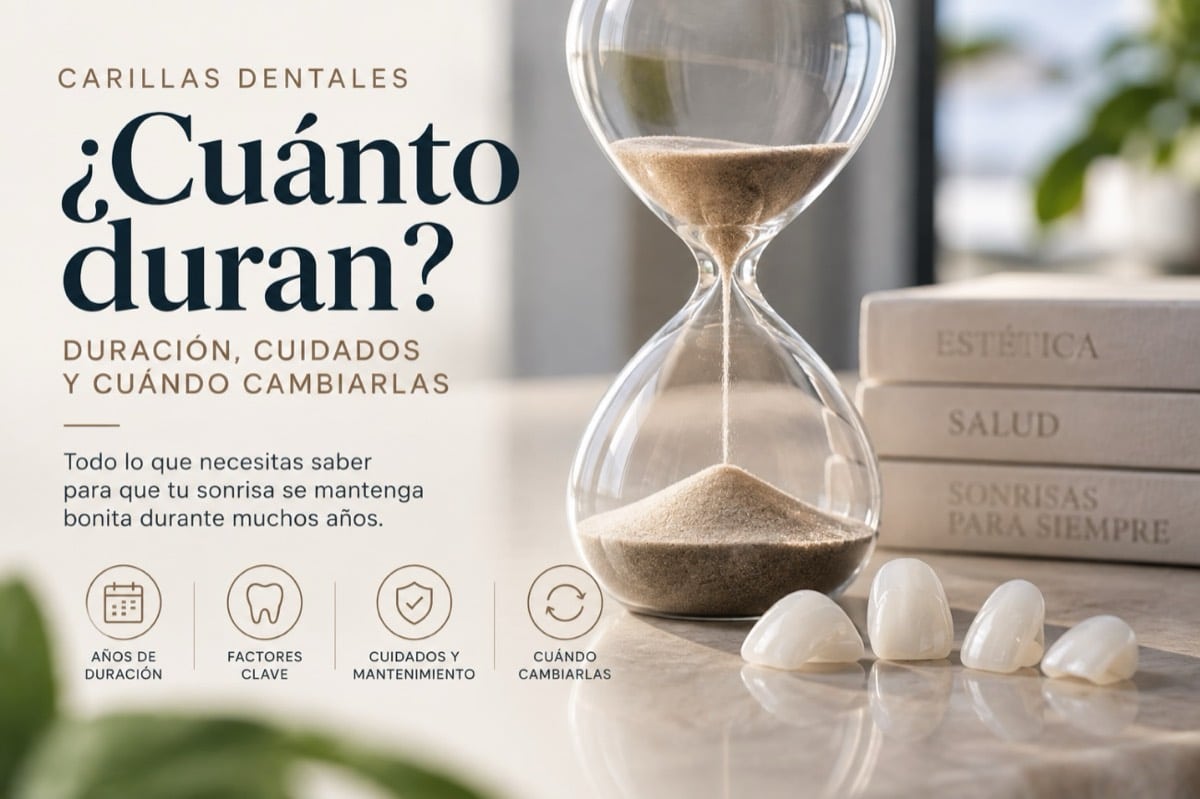
One of the most frequent questions before getting dental veneers is very simple: how long will they last?
It's a logical question, especially when we are talking about a treatment that has to work alongside the teeth for many years. But the answer can't simply be “10 years” or “15 years”.
How long a dental veneer lasts depends on the material, the condition of the teeth, the bite, the technique used, how much enamel is preserved, the patient's habits and maintenance.
How long do dental veneers last?
There is no single lifespan that applies to every patient. As a general guide, properly indicated and well-made porcelain veneers can last many years, and clinical studies show high survival rates at 10 years. A recently published systematic review and meta-analysis found survival rates above 93 % at 10 years for different types of porcelain veneers, although results vary with the material, the design and the clinical conditions. Composite veneers can also give good results, but they usually need more maintenance and may show colour changes, wear or loss of gloss sooner.How long do porcelain veneers last?
Porcelain veneers can show excellent clinical longevity, with survival rates close to or above 93 % after 10 years for different types of ceramic. This does not mean every veneer will last exactly 10, 15 or 20 years: it means a high proportion can keep working properly over that period, provided the case has been well selected and treated.How long do composite veneers last?
Over time composite may lose gloss, change colour, wear, chip slightly or need polishing. One of its important advantages is that it can be repaired and modified relatively easily. At Clínica Padrós, the composite veneers we currently offer have an approximate lifespan of 5 to 10 years, depending on factors such as hygiene, habits, technique and maintenance.Which lasts longer: composite or porcelain?
If we are talking purely about aesthetic stability and long-term survival, porcelain usually has the advantage. But that doesn't make it always the best option: composite can be very conservative, it is repairable and it can be an excellent solution for some young patients or in additive treatments. So the right question is not “which lasts longer?”, but “which material is best for my case and my long-term goals?”.The 8 factors that determine how long your veneers will last
1. The initial diagnosis
A veneer placed on a tooth that wasn't a good candidate may have a worse prognosis. Before treatment we need to study the condition of the teeth, the gums, the bite, wear, bruxism, colour and how much enamel is available.2. How much enamel is preserved
Whenever possible, it is best to keep the bond on enamel. Conservative aesthetic dentistry doesn't simply mean “removing little”, but removing only the structure needed to achieve the clinical goal.3. The bite
Veneers are part of a functional system. If certain teeth receive excessive forces, the restorations can suffer. Tooth contacts, jaw movements, overloads and interferences need to be analysed.4. Bruxism
It can subject teeth and restorations to significant forces. Some patients may need to control the overload, adjust the bite, wear a protective splint or have more frequent check-ups.5. The bonding technique
A veneer doesn't work simply because it is “stuck to the tooth”. Isolation, enamel preparation, the adhesive system, the cement, the fit and curing all need to be controlled.6. The design of the veneer
A veneer that is too thin, too thick or poorly designed can cause problems. The design must take into account thickness, anatomy, contacts, margins and function.7. The patient's habits
Biting hard objects, biting your nails, using your teeth as tools or chewing ice can increase the risk of fracture or wear.8. Maintenance
Even the best veneers need maintenance: regular checks of the teeth, gums, margins, bite and any wear, so that small problems are caught before they become big ones.Do porcelain veneers stain?
One of the great advantages of porcelain is its colour stability, which can last for many years. This is an important difference from composite, which may show more surface changes and staining over time. Bear in mind that the veneer may keep its colour while the natural teeth around it change, so the colour should be planned with the whole treatment in mind.Do composite veneers turn yellow?
Composite can change colour over time, depending on the material, finish, hygiene, diet, tobacco and maintenance. One of the advantages of composite is that professional polishing can restore some of the gloss and improve the surface.What can make a veneer break?
Fractures can have different causes: trauma, overload, bruxism, unsuitable design, insufficient thickness or bite problems. Clinical evidence identifies fracture and debonding among the main complications of porcelain veneers.What happens if a veneer comes off?
Debonding doesn't necessarily mean the whole veneer must be replaced. Depending on the condition of the restoration and the tooth, it may be possible to bond it again or a new one may need to be made. What matters is finding out why it happened: if there is a bite problem, simply re-bonding the veneer without solving the cause may mean the problem comes back.When do veneers need to be replaced?
There is no fixed date. A veneer shouldn't be replaced simply because ten years have passed; if it is still well fitted, functional and problem-free, there may be no clinical reason to change it. Conversely, it may need to be replaced sooner if there is a fracture, repeated debonding, leakage, decay or a significant aesthetic change.Does replacing veneers mean preparing the teeth again?
Not necessarily. It depends on how the original treatment was done and the current condition of the teeth. If enough tooth tissue has been preserved, the replacement can be more conservative. That is why the best strategy for the future is to preserve tooth tissue from the very first treatment.Can veneers last a lifetime?
It wouldn't be responsible to guarantee it. Although some veneers can last for decades, there is no universal guarantee of longevity: the patient may suffer trauma, bruxism, gum disease or changes in the bite. It is more accurate to talk about restorations with the potential to last a long time when they are properly indicated and maintained.10 tips to make your veneers last longer
- Keep up good oral hygiene.
- Don't use your teeth as tools.
- Avoid biting very hard objects.
- Control bruxism if you clench or grind your teeth.
- Have regular check-ups.
- Look after your gums.
- Don't obsess over whitening your veneers: porcelain doesn't respond to whitening like a natural tooth.
- Ask before having other treatments that could affect the overall result.
- Have maintenance done when needed, especially with composite.
- Don't wait for a veneer to break: come in if you notice any change.
Porcelain or composite if I want them to last many years?
If the main priority is aesthetic stability and long-term behaviour, porcelain usually has the advantage. But a patient may particularly benefit from composite because the treatment is very conservative, the change needed is small or a repairable solution is preferred. The best restoration is the one that solves the problem at the lowest possible biological cost.Frequently asked questions about how long veneers last
How many years do dental veneers last?They can last many years. Porcelain veneers show high survival rates at 10 years in clinical studies, although how long they last in each case depends on the material, diagnosis, technique, bite and maintenance.
Which lasts longer, composite or porcelain?In general, porcelain offers greater colour stability and excellent long-term behaviour. Composite has the advantage of being easier to repair.
When do I need to replace my veneers?Not simply because a certain number of years have passed. They are replaced when there is a clinical or aesthetic reason.
Does bruxism shorten the life of veneers?It can increase the risk of wear or fracture. That is why it must be diagnosed and controlled before and during treatment.
Can a broken veneer be repaired?In some cases yes, especially with composite. With porcelain it depends on the type and extent of the damage.
Conclusion
Dental veneers can last many years, but their longevity doesn't depend only on choosing a good material. It depends on the whole treatment: a proper diagnosis, precise planning, preserving enamel, good function, the right bonding technique and regular maintenance. So if you are thinking about veneers, don't just look for an answer to “how long do they last?”. Look for the answer to “how can they be made to last while preserving my teeth?”.Would you like to know which option is best for your smile?
At Clínica Padrós we carry out an individual assessment before recommending any aesthetic treatment, studying your teeth, your bite, the aesthetics of your smile and the possibilities for a conservative treatment.Selected references
- Long-Term Survival and Complication Rates of Porcelain Laminate Veneers in Clinical Studies: A Systematic Review — Alenezi A, et al. J Clin Med. 2021.
- Survival and Complication Rates of Feldspathic, Leucite-Reinforced, Lithium Disilicate and Zirconia Ceramic Laminate Veneers — Klein P, et al. J Esthet Restor Dent. 2025.
- Anterior composite restorations: A systematic review on long-term survival and reasons for failure — Demarco FF, et al. Dent Mater. 2015.
- Long-Term Outcomes of Ceramic Veneers Restorations: A Comprehensive Analysis of Clinical and Patient-Reported Metrics — Panayong T, et al. J Esthet Restor Dent. 2025.